StrategyPublished 11 min read
How to Make Money on Redbubble in 2026: The $1,000/Month System
How to make money on Redbubble in 2026 — the 80/12/6/2 earnings split, the five behaviors of $1k+ sellers, and a realistic 12-month plan.
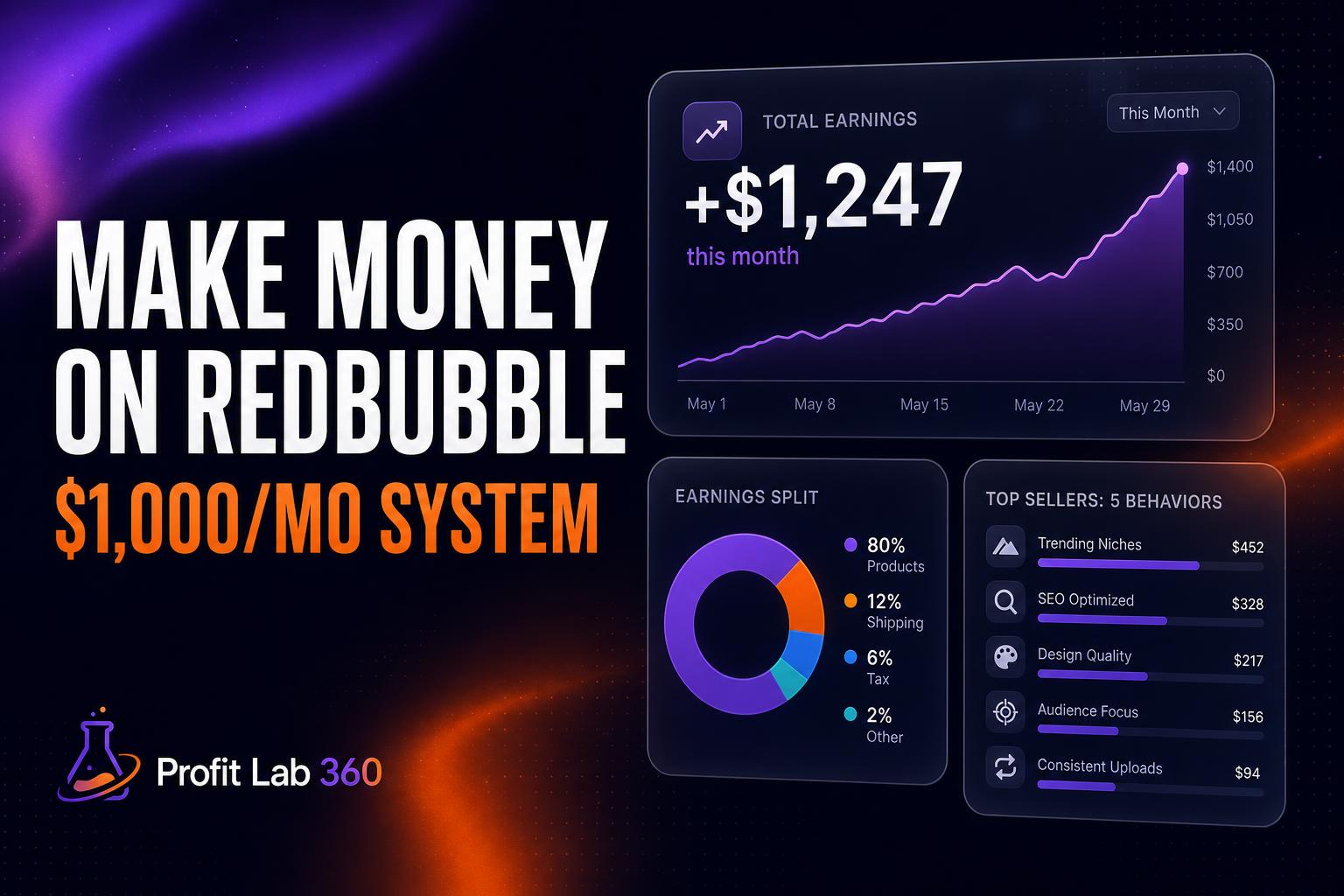
How to make money on Redbubble in 2026 — the 80/12/6/2 earnings split, the five behaviors of $1k+ sellers, and a realistic 12-month plan.
How do you make money on Redbubble in 2026? Making money on Redbubble is a math problem, not a luck problem. The sellers clearing $3,000–$15,000 per month follow the same operating model: validated niches, SEO-optimized listings, deep portfolios and cross-platform listing. This guide is the full system on how to make money Redbubble actually pays out for — what the top earners do, the realistic numbers for each milestone, and how to get from $0 to $1,000/month in 12 months.
How to make money on Redbubble in one sentence: you upload original designs that Redbubble manufactures on demand as t-shirts, stickers, phone cases, posters, hoodies and more. Every time a buyer purchases a product with your design, Redbubble pays you a royalty (default 20% margin, which you can adjust). There is no inventory, no upfront cost, and no shipping on your side — Redbubble handles fulfillment and customer service. Your job is to ship designs in researched niches with SEO-optimized tags, and to keep doing it consistently.
The honest distribution, based on community surveys and public seller dashboards:
The gap between groups is not talent. It's process. The top 2% all do the same five things — covered below.
Default artist margin = 20%. Average sticker pays ~$0.80. Average t-shirt pays ~$3.97. Average hoodie pays ~$8. Plug those into a realistic shop mix:
Use our free Redbubble fee calculator to model your own product mix and target margin before you upload.
Top sellers never open Photoshop without a validated niche. They check three signals: is anyone searching this on Redbubble's internal search, is the keyword saturated (50k+ existing listings = skip), and is there a clear buyer persona. Our niche finder automates this in 20 seconds.
Redbubble allows exactly 50 tags per listing. Fewer = less search visibility, math is that simple. Top sellers also avoid keyword stuffing (Redbubble detects and demotes it) and use semantic variations instead. The AI tag generator produces all 50, deduplicated, ordered by demand — copy and paste.
Redbubble's algorithm rewards consistent uploads. The portfolio effect kicks in around 100 designs — search ranking starts compounding because shops with more designs appear more often, and more appearances mean more buyer trust signals. Realistic portfolio targets:
Every Redbubble-ready design also belongs on TeePublic, Society6, Zazzle and Amazon Merch. Same upload effort, 3–4x the income. Margins differ per platform — our platform comparisons show where each design pays best.
Check Redbubble Studio weekly. Identify your top 5 sellers each month. Make 5 variations of each (color, audience tweak, occasion variant). That's how a single winning design becomes 20 designs that each compound.
Here's the timeline that produces $1,000/month by month 12 for a beginner who actually does the work:
Yes. The platform paid out over $700M to artists last year. The money is real. But the days of slapping 10 designs online and hoping for sales are long gone. The sellers making money treat it like a business: research first, SEO every listing, ship deep, cross-list everywhere, iterate on winners.
Profit Lab 360 packages the exact five-step process into one workspace: niche finder, tag generator, fee calculator, AI design studio and multi-platform publishing kit. 100 free credits, no credit card.
Start with the free niche finder — three validated Redbubble niches in 60 seconds.